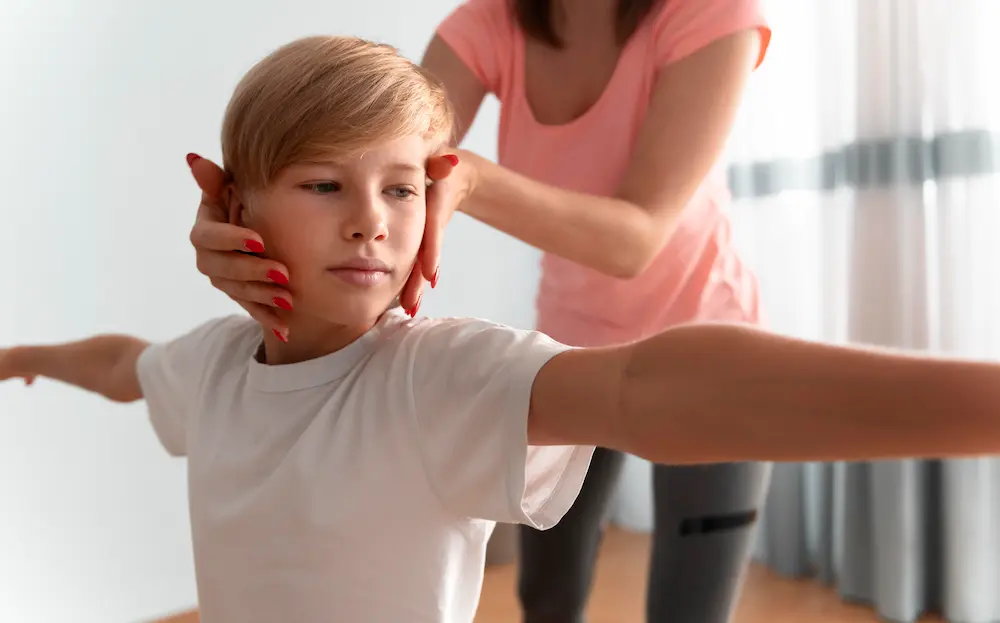
Chiropractic care is safe for children and teens when performed by an experienced provider using age-appropriate techniques. At ChiroMed Crawfordsville, Dr. Jeff McIntyre uses gentle, modified approaches for younger patients – adjustments for a child feel nothing like those for an adult, and many kids actually enjoy the visits. Addressing spinal issues early can prevent them from becoming bigger problems as children grow.
Why Would a Child Need Chiropractic Care?
This is the most common question parents ask, and it’s a fair one. Kids seem resilient – they bounce around, fall down, get back up, and rarely complain. But that resilience can mask cumulative stress on the spine that builds quietly over years.
Think about what young spines go through. Birth itself can involve significant forces on an infant’s neck and spine. Toddlers fall hundreds of times learning to walk. School-age kids carry heavy backpacks, sit at desks for hours, and increasingly spend time hunched over tablets and phones. Teen athletes absorb repetitive impacts in sports. None of these things necessarily cause obvious injury, but they accumulate.
When parents bring their child in to see Dr. Jeff, it’s often for one of a few reasons: a specific complaint like back or neck pain, a sports injury, concerns about posture, or a recommendation from another provider. In each case, the evaluation drives the conversation about whether and how chiropractic care can help.
Common Reasons Parents Bring Kids to ChiroMed
Back and Neck Pain
Back pain in children is more common than most parents realize. Studies suggest that a significant percentage of school-age kids experience back pain, with rates increasing through the teen years. Poor posture from device use, heavy backpacks, and prolonged sitting at school all contribute.
Teen back pain especially deserves attention. Adolescents often dismiss it as normal, but pain at that age can reflect real spinal issues that, left unaddressed, progress into adulthood. Early intervention is far easier than treating a long-standing problem.
Sports Injuries
Young athletes in Crawfordsville are active year-round – football, basketball, baseball, wrestling, gymnastics, cross country. These sports put real demands on developing spines and joints. Chiropractic care helps with both acute injuries and the overuse patterns that build up over a competitive season.
Teen athletes who receive regular chiropractic care often report better recovery between practices, fewer recurrent injuries, and improved range of motion. Addressing biomechanical imbalances early can also reduce injury risk going forward – something any sports parent values.
Posture Problems
Forward head posture from phone and tablet use is now common in children as young as 8 or 9. Every inch the head moves forward from its neutral position adds significant extra load to the cervical spine. In a growing child, this sustained abnormal load can influence how the spine develops over time.
Catching postural problems early – before they become structural – is one of the highest-value things chiropractic care can offer younger patients. It’s much easier to correct a postural pattern in a 12-year-old than a 35-year-old.
Headaches
Tension headaches in teens are frequently linked to cervical spine dysfunction and muscle tension – the same mechanisms that cause headaches in adults. If your teenager is getting frequent headaches that aren’t explained by other causes, spinal evaluation is worth pursuing.
Scoliosis Monitoring
While chiropractic care doesn’t correct scoliosis, it can help manage discomfort and maintain mobility in adolescents with mild curves. Regular monitoring during growth spurts – when curves can progress rapidly – is important, and chiropractic providers often notice changes that warrant further evaluation.
Is Chiropractic Safe for Children? Addressing the Real Concern
Safety is the first and most important question. The honest answer is yes – chiropractic care has a strong safety record in pediatric patients when performed by a qualified provider using appropriate techniques.
The key word is “appropriate.” Pediatric adjustments are not scaled-down adult adjustments. The force used for an infant is finger-tip pressure – comparable to the pressure you’d use to test a ripe tomato. For a child, it’s gentle mobilization rather than the high-velocity thrusts used with adults. Technique is tailored to age, size, and developmental stage.
At ChiroMed Crawfordsville, every pediatric evaluation starts with a thorough history and examination. If I find something that warrants referral to another provider – a pediatrician, orthopedist, or neurologist – I’ll say so directly. The goal is the child’s wellbeing, not just a chiropractic treatment plan.
What a Pediatric Visit Looks Like at ChiroMed
Parents are present for every part of the visit – examination, discussion, and treatment. Nothing happens without full explanation and consent. For younger children especially, I take time to explain what I’m doing in terms they understand, and I move at their pace. A nervous child doesn’t get rushed.
The examination includes posture assessment, range of motion testing, and gentle palpation of the spine to identify areas of restriction or tenderness. For teens presenting with sports injuries, orthopedic testing is added as appropriate.
Treatment for children typically involves very light adjusting techniques, gentle mobilization, and often guidance for parents on stretches or postural modifications to do at home. The goal is correction and education, not dependency on ongoing care.
What About Infants?
Some parents bring infants for evaluation after difficult deliveries – particularly those involving forceps, vacuum extraction, or prolonged labor. These births can create tension and restriction in the upper cervical spine that may contribute to feeding difficulties, excessive crying, or preferential head turning.
Infant adjustments involve extremely gentle pressure – no cracking, no thrusting. The goal is to restore normal movement to restricted joints and reduce muscle tension. Many parents report noticeable improvement in comfort and behavior after just a few sessions.
As with all pediatric care, if findings during the evaluation suggest something beyond chiropractic scope, referral happens immediately.
Backpack Safety and Spine Health for School-Age Kids
A quick practical note for Crawfordsville parents: backpack weight is a real issue for school-age spines. The general guideline is that a backpack should not exceed 10-15% of a child’s body weight. A 60-pound child should not be carrying 15 pounds of books and a water bottle every day.
Beyond weight, how the pack is worn matters. Both straps should always be used. Single-shoulder carrying shifts load asymmetrically and can contribute to spinal misalignment over time. If your child consistently complains of back or shoulder pain after school, the backpack is worth evaluating.
Supporting Your Child’s Spine Health Long-Term
Chiropractic care is one piece of a broader picture. Encouraging regular movement, limiting prolonged screen time in poor positions, teaching proper lifting and carrying habits, and maintaining a healthy weight all contribute to long-term spine health for kids and teens.
The sports injury prevention habits we teach young athletes extend far beyond the playing field. Good movement patterns established early protect the spine for decades.
If you have questions about whether chiropractic care is right for your child, or if your son or daughter is dealing with back pain, neck pain, headaches, or a sports injury in Crawfordsville, call us at 765-362-1500 or schedule online. We’re happy to talk through your concerns before committing to any treatment. Get Well. Stay Well.