

Poor posture doesn’t just look bad, it creates structural stress throughout your spine that leads to pain, fatigue, and accelerated degeneration. At ChiroMed Crawfordsville, Dr. Jeff McIntyre corrects postural dysfunction through chiropractic adjustments that restore proper alignment and functional rehabilitation that retrains the muscles responsible for maintaining good posture throughout your day.
What Poor Posture Actually Does to Your Body
When you slouch or hold your head forward for hours each day, you’re not just creating a cosmetic problem. You’re fundamentally changing how forces distribute through your spine and how your muscles work to keep you upright.
Forward head posture, where your head juts forward from your shoulders, is incredibly common in our screen-dominated world. For every inch your head moves forward from its ideal position, it effectively weighs an extra 10 pounds that your neck muscles must support. A head that should weigh 10-12 pounds can effectively weigh 40-50 pounds when significantly forward.
This constant strain exhausts the muscles trying to hold your head up, leading to chronic tension in your neck and upper back. It also changes the curve of your cervical spine, creating excessive stress on the discs and joints.
Rounded shoulders and an exaggerated upper back curve (kyphosis) compress your chest cavity and can even affect your breathing capacity. They also create imbalances between your chest muscles, which become tight and short, and your upper back muscles, which become overstretched and weak.
In your lower back, poor posture often flattens the natural lumbar curve or creates an excessive curve (lordosis). Both scenarios increase stress on your lumbar discs and contribute to low back pain.
Why You Can’t Just “Stand Up Straighter”
If fixing posture were as simple as remembering to sit up straight, no one would have posture problems. The reality is more complex because poor posture creates structural changes that prevent you from easily maintaining good alignment.
When you’ve held poor posture for months or years, certain muscles become chronically shortened and tight while their opposing muscles become weak and overstretched. This imbalance makes it physically difficult to maintain proper posture even when you’re consciously trying.
Your spine also adapts to the positions you hold most often. Vertebrae shift out of ideal alignment, joints become stiff in the directions you don’t move them, and connective tissues remodel to support the postures you maintain most frequently.
Simply trying harder to sit up straight fights against these structural adaptations. You might manage it for a few minutes, but as soon as your attention shifts, you’ll revert to your habitual pattern because your body’s default settings haven’t changed.
This is where chiropractic care becomes important. We address the structural problems preventing good posture, not just remind you to sit up straight.
Common Postural Problems We See
At ChiroMed Crawfordsville, certain postural patterns show up repeatedly, especially among people with desk jobs or heavy smartphone use.
Forward Head Posture and Text Neck
This is the most common postural problem we treat. Your head sits forward of your shoulders, creating that classic “looking down at your phone” position even when you’re not actually using your phone.
Forward head posture causes chronic neck pain, upper back tension, and tension headaches. Over time, it accelerates degenerative changes in your cervical spine.
Rounded Shoulders and Upper Crossed Syndrome
Shoulders that round forward and an exaggerated upper back curve often occur together. This pattern, called upper crossed syndrome, involves tight chest and neck muscles combined with weak upper back and deep neck flexor muscles.
People with this posture often experience shoulder pain, upper back discomfort, and difficulty taking deep breaths. The imbalanced muscle tension also contributes to neck problems and headaches.
Anterior Pelvic Tilt and Lower Crossed Syndrome
When your pelvis tilts forward excessively, it creates an exaggerated curve in your lower back. This pattern, called anterior pelvic tilt or lower crossed syndrome, involves tight hip flexors and lower back muscles paired with weak abdominals and glutes.
This postural dysfunction is a major contributor to chronic low back pain and can lead to hip problems as well. It’s particularly common in people who sit for long periods.
Lateral Shifts and Asymmetries
Many people habitually favor one side, creating postural asymmetries. You might always carry your bag on the same shoulder, cross the same leg when sitting, or shift your weight to one leg when standing.
These habits create uneven loading patterns that contribute to scoliosis development or progression, one-sided pain, and compensatory problems throughout your body.
How Chiropractic Care Corrects Posture
Our approach to posture correction addresses both the structural problems preventing good posture and the muscle imbalances that have developed from poor postural habits.
Restoring Spinal Alignment
Chiropractic adjustments restore proper position and motion to vertebrae that have shifted out of alignment from chronic poor posture. When your spine is properly aligned, maintaining good posture becomes easier because you’re not fighting against structural restrictions.
We pay particular attention to the cervical spine and thoracic spine in posture cases, as these are the areas most affected by forward head posture and rounded shoulders. Adjustments in these areas often provide immediate relief from the tension and discomfort caused by poor posture.
Releasing Tight, Shortened Muscles
Massage therapy and other soft tissue techniques release the chronically tight muscles that develop from poor posture. Tight chest muscles, hip flexors, and upper trapezius all need to be addressed to allow better postural alignment.
These muscles have physically shortened and adapted to your poor posture over time. They won’t release just from trying to sit up straighter. They need targeted treatment to restore their normal length and flexibility.
Strengthening Weak Stabilizers
Functional rehabilitation exercises strengthen the muscles that should be maintaining your posture automatically. Deep neck flexors, middle and lower trapezius, serratus anterior, core stabilizers, and glutes all play crucial roles in proper posture.
Dr. Jeff prescribes specific exercises based on your postural assessment. These aren’t generic stretches. They’re targeted interventions chosen to address your specific imbalances and weaknesses.
The goal is to retrain these muscles so they activate automatically throughout your day, maintaining good posture without constant conscious effort.
The Role of Ergonomics
While we’re correcting structural problems and rebuilding strength, you also need to address the environmental factors that created poor posture in the first place. Ergonomic improvements reduce the daily stress that undermines your treatment progress.
Desk and Computer Setup
Your desk setup should support good posture rather than fight against it. Monitor at eye level, chair height allowing feet flat on the floor with knees at 90 degrees, keyboard and mouse at elbow height, and proper lumbar support all contribute to better posture during work hours.
Even small adjustments make a difference. Raising your monitor six inches or adjusting your chair height can significantly reduce the postural stress you experience during an eight-hour workday.
Smartphone and Device Use
Bring your phone up to eye level rather than looking down at it constantly. This simple habit change can dramatically reduce the strain on your neck from forward head posture.
Take regular breaks from screens to move and reset your posture. Every 20-30 minutes, stand up, move around, and do a few simple stretches to counteract the sustained positions you’ve been holding.
Sleep Positions and Pillows
The position you sleep in and the pillow you use affect your posture. A pillow that’s too high or too flat changes your neck alignment for 7-8 hours every night, undoing the progress you make during the day.
Side sleepers generally need a thicker pillow to keep their neck aligned with their spine. Back sleepers need a thinner pillow. Stomach sleeping is the worst position for your neck and should be avoided if possible.
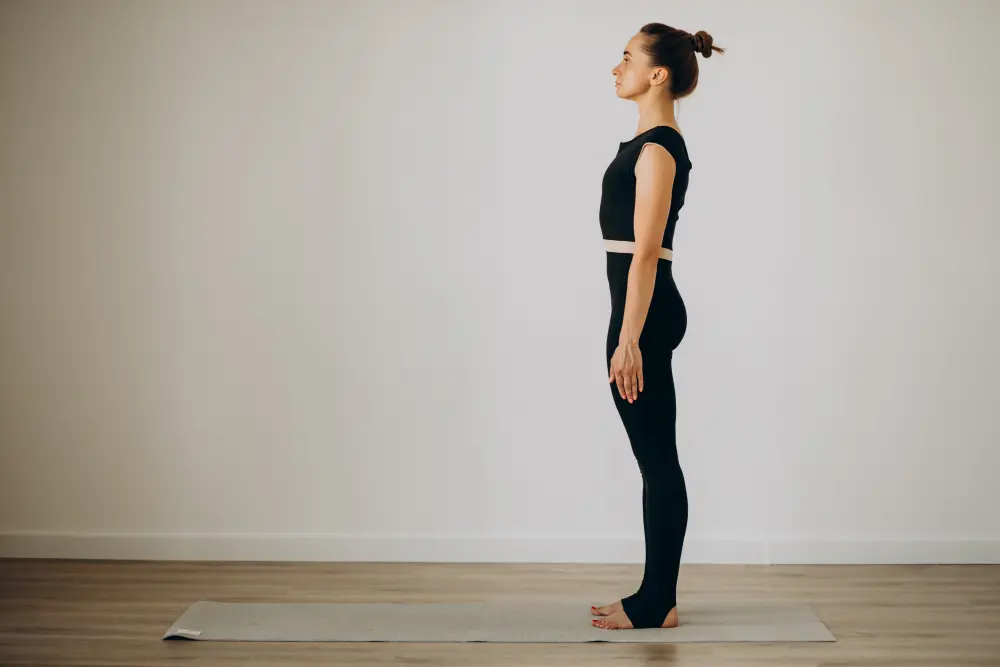
Exercises You Can Do at Home
Between chiropractic visits, these exercises help reinforce better posture patterns. Do them daily for best results.
Chin Tucks
Sitting or standing tall, gently pull your chin straight back, creating a double-chin position. Hold for 5-10 seconds, then relax. Repeat 10 times several times throughout the day. This strengthens deep neck flexors and counters forward head posture.
Wall Angels
Stand with your back against a wall, feet a few inches away from the wall. Press your lower back, upper back, and head against the wall. Raise your arms into a goalpost position with elbows at shoulder height, then slowly slide them up and down while keeping everything pressed against the wall. This strengthens upper back muscles and opens the chest.
Cat-Cow Stretch
On hands and knees, alternate between arching your back and rounding it, moving slowly and smoothly. This mobilizes your entire spine and helps restore proper spinal curves.
Hip Flexor Stretch
Step forward into a lunge position, keeping your back leg straight. Gently push your hips forward until you feel a stretch in the front of your back leg’s hip. Hold for 30 seconds each side. This releases tight hip flexors that contribute to anterior pelvic tilt.
How Long Does Posture Correction Take
Posture correction is a gradual process because you’re changing patterns and structures that developed over years. Most patients start noticing improvements within a few weeks, but significant, lasting change typically takes 2-4 months of consistent treatment and home exercise.
The timeline depends on how long you’ve had poor posture, how severe the structural changes are, and how consistent you are with treatment and home exercises. Younger patients with more recent postural problems typically respond faster than older patients with decades of poor posture.
Even after your posture has significantly improved, ongoing maintenance through periodic chiropractic visits and continued exercise helps prevent reverting to old patterns. Think of it like physical fitness. You can get in shape, but maintaining it requires ongoing effort.
The Benefits of Better Posture
Improving your posture does more than just make you look better. It reduces chronic pain and tension throughout your back and neck. It improves your breathing capacity by opening up your chest. It can increase your energy levels by reducing the constant muscle fatigue from fighting against poor alignment.
Better posture also improves athletic performance by allowing more efficient movement patterns. It may even boost confidence and how others perceive you, as research shows people with better posture are perceived as more confident and competent.
Most importantly, correcting posture now prevents the accelerated spinal degeneration that occurs from years of abnormal stress on your discs and joints. The earlier you address postural problems, the more damage you prevent down the road.
When to Seek Professional Help
If you’re experiencing pain from poor posture, if you’ve tried to improve your posture on your own without success, or if you notice your posture is getting progressively worse, professional evaluation is warranted.
Also seek care if poor posture is affecting your breathing, causing frequent headaches, or limiting your activities. These signs suggest more significant structural problems that need comprehensive treatment.
Get Started with Posture Correction
If poor posture is causing you pain or you want to prevent future problems, ChiroMed Crawfordsville can help. Dr. Jeff’s comprehensive approach addresses the structural causes of poor posture and retrains your body to maintain better alignment naturally.
Call 765-362-1500 or schedule online to book your posture evaluation. Let’s correct the habits creating problems and build the strength you need for lasting improvement in Crawfordsville and Montgomery County.