
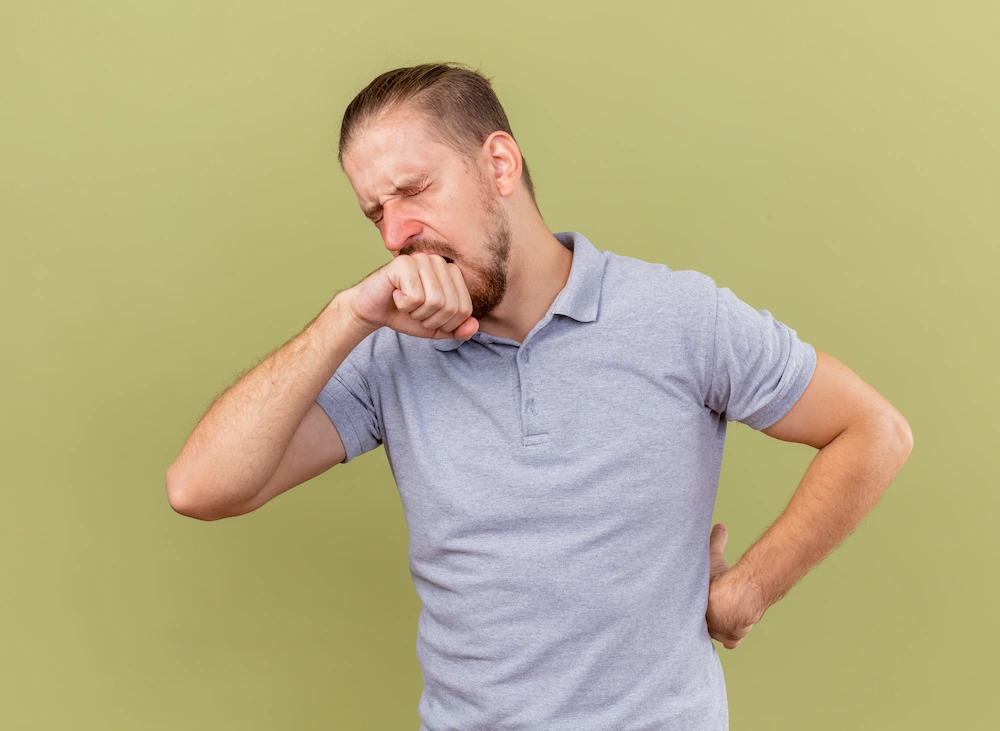
That sharp jolt of back pain when you sneeze or cough happens because the sudden, forceful pressure spike travels straight through your spine and abdomen. For a healthy back, it’s no problem. But if you have a disc issue, joint irritation, or muscle strain, that pressure surge lands right on the vulnerable spot. It’s often a sign worth paying attention to, especially if it keeps happening.
What Happens in Your Body When You Sneeze
A sneeze is a violent, involuntary event. Air can leave your body at remarkable speed, and to generate that force, your diaphragm and abdominal muscles contract hard and fast. This causes a sudden, sharp spike in pressure inside your abdomen and spinal canal.
Coughing does the same thing, just usually with a bit less force. Both create what’s essentially an internal pressure wave that your spine has to absorb in an instant.
In a healthy spine with good muscular support, this is handled without any issue. The problem shows up when there’s already something vulnerable in the lower back.
Why It Hurts When Something’s Already Wrong
Disc Problems
This is the most important one to understand. The pressure spike from a sneeze or cough increases the pressure inside your spinal discs. If you have a bulging or herniated disc, that extra pressure pushes the disc against nearby nerves more forcefully, producing a sharp jolt of pain that may even shoot down the leg.
Pain that radiates into the buttock or leg when you sneeze is a classic sign of disc involvement and nerve irritation. If this is happening to you, it’s worth getting evaluated rather than ignoring it. Learn more about disc problems and what they mean.
Joint Irritation
The small facet joints in your lower back can become inflamed and irritated. The sudden movement and pressure of a sneeze can jolt these already-sensitive joints, producing a sharp localized pain that doesn’t necessarily travel anywhere.
Muscle Strain
If you’ve strained the muscles supporting your lower back, the forceful contraction during a sneeze or cough pulls on those injured muscles. This tends to produce a sharp, contained pain right in the muscle rather than radiating pain.
The Bracing Reflex
Sometimes the issue is the awkward way we brace during a sneeze. If you stiffen and twist slightly, you can momentarily load an unprepared spine in a vulnerable position, which aggravates whatever sensitivity is already there.
What the Pain Pattern Tells Us
The way the pain behaves gives useful clues. Pain that stays localized in the lower back usually points to muscle or joint involvement. Pain that shoots down into the buttock, thigh, or leg suggests nerve irritation, often from a disc.
Pain that’s brief and fades quickly after the sneeze is generally less concerning than pain that lingers or that’s accompanied by ongoing symptoms like numbness, tingling, or weakness in the leg.
If sneezing reliably triggers leg symptoms, that’s a meaningful sign that a nerve is being compressed, and it deserves a proper look.
A Simple Trick to Protect Your Back
Here’s something practical you can use right away. When you feel a sneeze or a strong cough coming, try to stand up if you’re sitting, and keep your spine in a neutral, slightly extended position rather than bending forward.
Bracing your abdominal muscles slightly and avoiding the instinct to curl forward reduces the load on your discs during the pressure spike. Some people find that placing a hand on a wall or countertop for support helps too. It sounds small, but it can make a real difference if you’re prone to these jolts.
When to Take It Seriously
Occasional mild discomfort when you sneeze, especially during a cold when you’re coughing and sneezing a lot, isn’t necessarily alarming. But a few patterns warrant evaluation.
Pain that consistently shoots down your leg when you sneeze or cough, pain that’s severe, or pain accompanied by numbness, tingling, or weakness all suggest nerve involvement that should be checked. The same goes for back pain that lingers well beyond the sneeze itself.
Any back pain combined with loss of bladder or bowel control is a medical emergency and requires immediate care, not a chiropractic appointment.
How Chiropractic Care Helps
When sneezing triggers back pain because of a disc issue, spinal decompression therapy can be especially effective. It gently relieves pressure on the disc and the nerve it’s pressing against, addressing the actual source of the jolt.
Chiropractic adjustments restore proper movement to restricted or irritated joints, reducing the sensitivity that makes a sneeze so painful. For muscle-related pain, soft tissue work and rehabilitation address the strained tissue and rebuild support.
The goal is figuring out exactly why the pressure spike hurts you, then addressing that specific cause. Once the underlying issue settles, sneezing stops being something you brace against.
If sneezing or coughing keeps sending pain through your lower back in Crawfordsville, don’t just keep wincing through it. Call us at 765-362-1500 or book online. Get Well. Stay Well.