Your feet are the foundation your entire body stands on, so when your shoes don’t support them properly, the effects travel upward. Poor footwear can throw off your alignment from the ground up, contributing to knee pain, hip pain, and lower back pain that has nothing obviously to do with your feet. If your pain has no clear cause, your shoes are worth a closer look.
Why Your Feet Affect Your Whole Body
Think of your body like a building. If the foundation is off, everything stacked on top of it shifts to compensate. Your feet are that foundation. Every step sends forces up through your ankles, knees, hips, and spine, and how your feet strike the ground determines how those forces are distributed.
When your feet are properly supported and aligned, the load travels evenly up the chain. When they’re not, the joints above have to compensate, and over time that compensation creates wear, strain, and pain in places that seem unconnected to your feet.
This is something I explain to patients in Crawfordsville often, because the connection isn’t obvious. Someone comes in with knee or back pain and is surprised when we start looking at their shoes and how they walk.
How Bad Shoes Create Pain Up the Chain
Worn-Out Shoes
Shoes break down over time, and they rarely break down evenly. As the cushioning compresses and the soles wear unevenly, they start tilting your foot in ways it wasn’t meant to go. Most people wear shoes far longer than they should, and worn-out shoes are one of the most common footwear-related causes of pain I see.
No Arch Support
Flat, unsupportive shoes let your arches collapse with each step. This causes the foot to roll inward (overpronation), which rotates the lower leg, which changes the angle of the knee, which alters how the hip and pelvis sit. A small problem at the foot becomes a chain of compensations up to the lower back.
High Heels
Heels shift your weight forward and force your lower back to arch more to keep you balanced. This increases pressure on the lumbar spine and the joints at the back of it. Regular high heel wear is a well-known contributor to lower back and knee problems.
Completely Flat, Thin Soles
On the other end, ultra-flat shoes with no cushioning or support (many fashion flats and worn-down sneakers) provide nothing to absorb impact. Every step sends shock straight up through your joints. For people who stand or walk a lot, this adds up.
Signs Your Shoes Might Be the Problem
A few clues point toward footwear being involved. Your pain is worse on days you’re on your feet more. It improves when you wear certain shoes and worsens in others. You notice uneven wear patterns on the soles of your shoes. Your pain showed up around the time you started wearing a new pair or wore out an old favorite.
Another telling sign: pain that affects one side more than the other, which can reflect an asymmetry in how you’re striking the ground or a difference in how your shoes have worn.
The Connection to Specific Pain
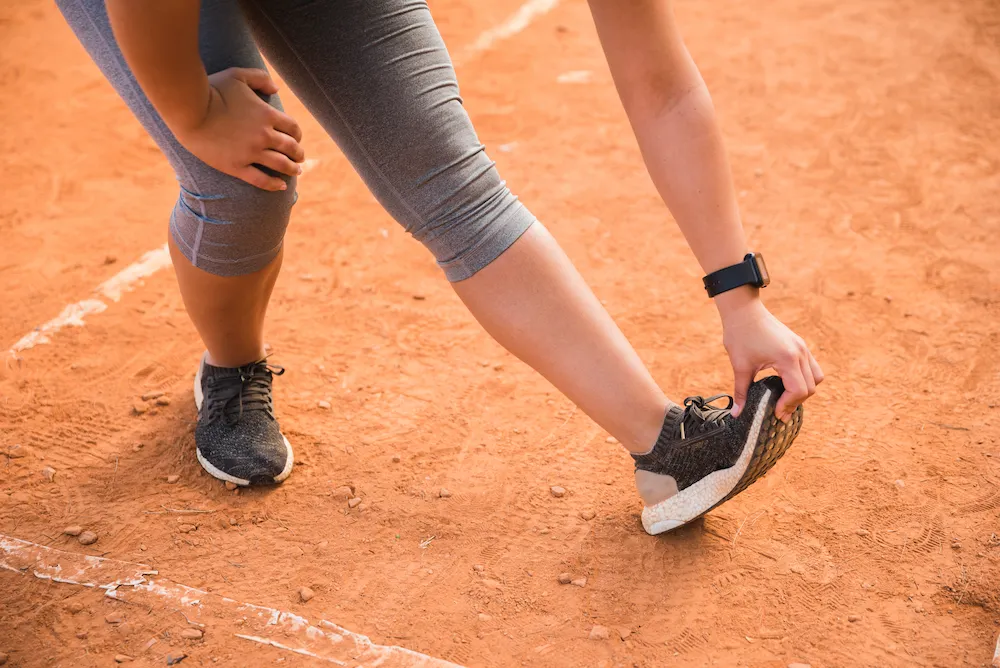
Footwear issues commonly show up as knee pain, because the knee is caught in the middle of the chain and absorbs a lot of the rotational stress from poor foot mechanics. Hip pain follows similar logic, as the hip adjusts to compensate for what’s happening below it.
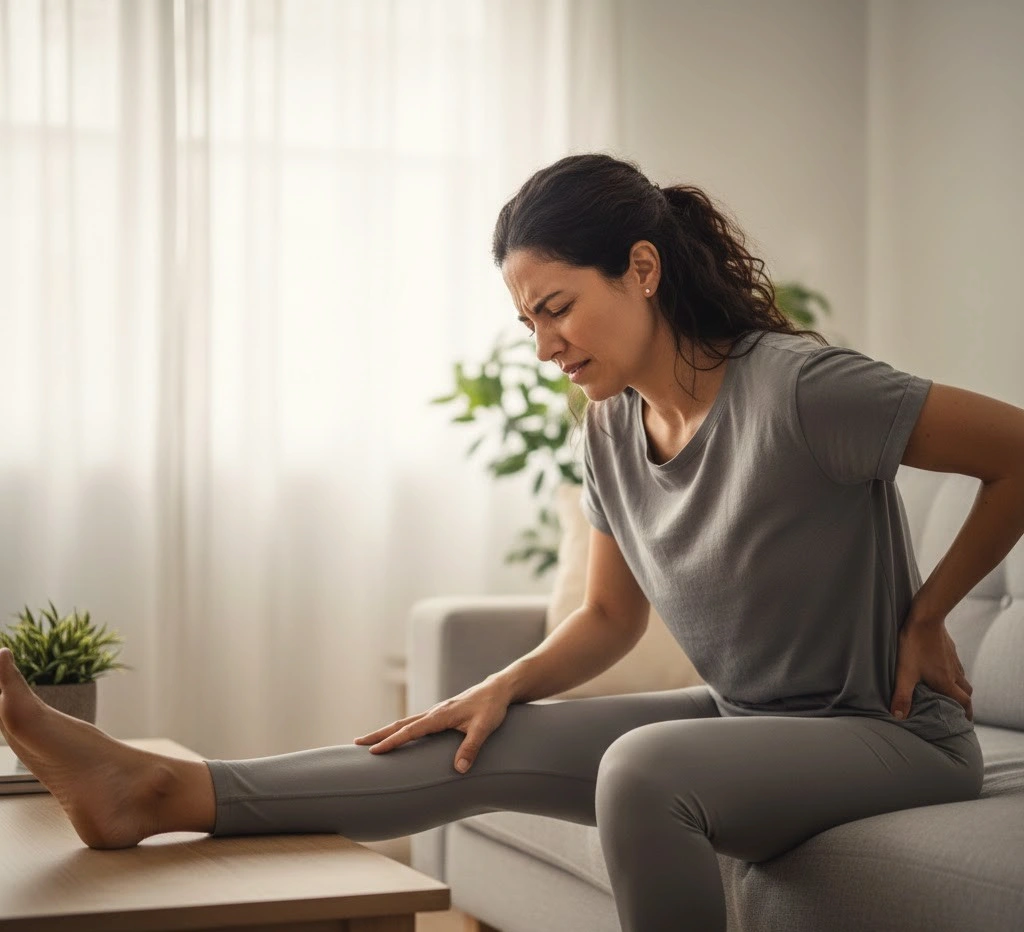
Lower back pain from footwear usually develops gradually as the spine adapts to altered pelvic positioning. Because it builds slowly, people rarely connect it to their shoes, which is exactly why this connection is worth knowing about.
What Good Footwear Looks Like
Supportive shoes share some common features. They have adequate arch support that matches your foot type, a cushioned but firm sole that absorbs shock without being mushy, a stable heel counter that holds your heel in place, and enough room in the toe box.
Replace athletic shoes regularly, since the cushioning wears out long before the shoe looks worn. If you’re on your feet a lot for work, prioritize support over style. And if you’ve found a brand or style that keeps your pain away, stick with it.
That said, off-the-shelf shoes are a general solution. Some people need something tailored to their specific foot mechanics.
How Chiropractic Care Addresses the Whole Chain
Fixing your shoes helps, but if poor footwear has already created compensation patterns up the chain, those need to be addressed too. This is where a full evaluation matters.
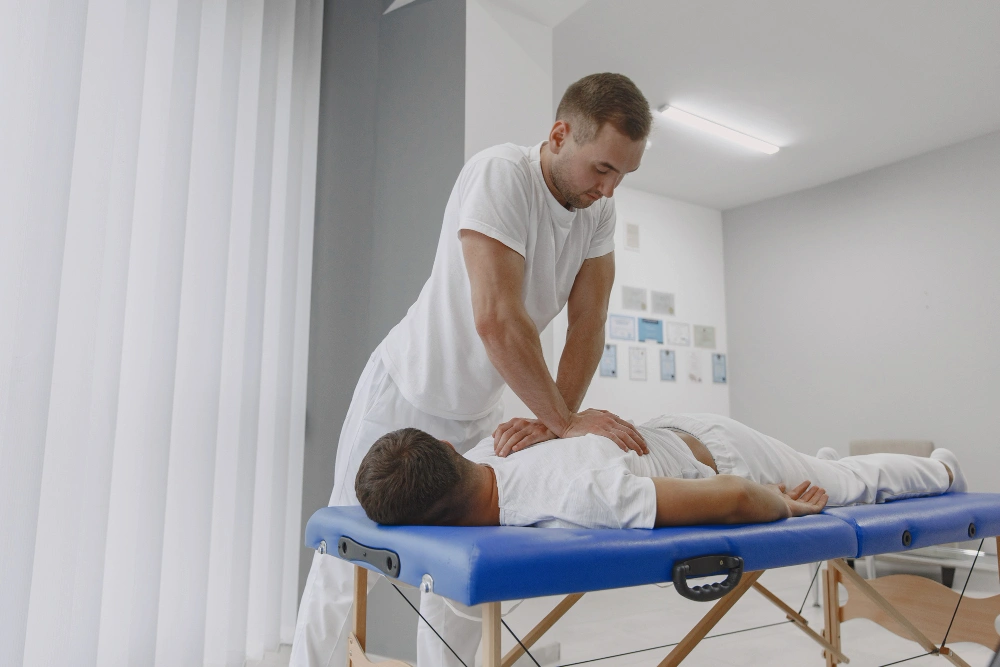
Chiropractic adjustments restore proper alignment and movement to the joints that have been compensating, from the ankles up through the knees, hips, and spine. Functional rehabilitation corrects the movement patterns and strengthens the muscles that support proper alignment, so your body holds its corrections.
Part of the evaluation includes looking at how you walk and how your feet function, which helps identify whether footwear or foot mechanics are contributing to your pain. Addressing the foundation and the compensations together gives the most complete and lasting result.
Don’t Overlook Your Foundation
If you’ve been dealing with stubborn knee, hip, or back pain that doesn’t have an obvious cause, your shoes and foot mechanics are worth investigating. It’s one of the most overlooked factors in chronic lower-body and back pain.
If this sounds like it could be part of your picture and you’re in Crawfordsville or Montgomery County, call us at 765-362-1500 or schedule online. Let’s look at your pain from the ground up. Get Well. Stay Well.