
Whether you’re a high school athlete, weekend warrior, or someone who just loves staying active, sports injuries can bring everything to a frustrating halt. That sharp pain in your shoulder during a throw. The low back tightness that won’t let up after a round of golf. The ankle that never quite healed right.
At ChiroMed Crawfordsville, Dr. Jeff McIntyre helps Montgomery County athletes of all levels recover from injuries, address underlying problems that caused them, and build the strength needed to prevent them from coming back.
Why Athletes Turn to Chiropractic Care
Sports put unique demands on the body. Repetitive motions, high-impact collisions, sudden direction changes, and pushing through fatigue all create conditions where injuries happen. And when they do, athletes want two things: get better fast and get back to doing what they love.
Chiropractic care fits naturally into this picture. A literature review published in the Journal of the Canadian Chiropractic Association notes that chiropractors play a significant role in sports medicine, particularly through early detection and prompt treatment of musculoskeletal injuries. The goal is to identify what’s wrong, correct biomechanical issues, and restore function so athletes can return to activity safely.
At ChiroMed, we take this approach seriously. We don’t just want to get you out of pain—we want to understand why the injury happened and what needs to change to keep it from happening again.
Common Sports Injuries We Treat
The human body is remarkably adaptable, but it has limits. Push past those limits repeatedly without proper support, and injuries follow. Here are some of the most common sports-related conditions we see at our Crawfordsville clinic:
Muscle strains and ligament sprains happen when tissues are stretched beyond their capacity. Hamstring pulls, groin strains, and ankle sprains fall into this category. These injuries range from mild (a few days of discomfort) to severe (weeks or months of recovery).
Overuse injuries develop gradually from repetitive stress. Tennis elbow, runner’s knee, shin splints, and rotator cuff tendinitis are classic examples. The tricky thing about overuse injuries is that they often don’t hurt much at first—just a nagging sensation that gets progressively worse until it can’t be ignored.
Back pain affects athletes in nearly every sport. Golf, tennis, running, weightlifting, basketball—all involve significant spinal loading and rotation. Disc herniations, facet joint irritation, and muscle spasms are common results.
Neck pain often stems from contact sports or activities involving overhead motion. Wrestlers, swimmers, and volleyball players frequently deal with cervical spine issues.
Shoulder injuries plague throwing athletes, swimmers, and anyone who uses overhead arm motion repeatedly. The shoulder’s incredible range of motion comes at the cost of stability, making it vulnerable to impingement, instability, and rotator cuff problems.
Hip and joint pain shows up in runners, cyclists, and athletes in sports requiring lateral movement. The hip joint absorbs tremendous force during athletic activity, and when mechanics are off, problems develop.
The ChiroMed Approach to Sports Injury Recovery
Not every sports injury is the same, and treatment shouldn’t be either. Our approach starts with understanding exactly what’s going on.
Comprehensive evaluation comes first. Dr. Jeff assesses how you move, where restrictions exist, and what’s contributing to your symptoms. This includes examining areas that might seem unrelated to your primary complaint—because in the body, everything connects.
Chiropractic adjustments restore proper joint function throughout the spine and extremities. When joints move correctly, muscles work more efficiently, nerve function improves, and the conditions for healing are optimized.
Soft tissue therapy addresses muscle tightness, adhesions, and trigger points that often accompany injuries. Our massage therapy team works alongside chiropractic care to release chronic tension and improve tissue mobility.
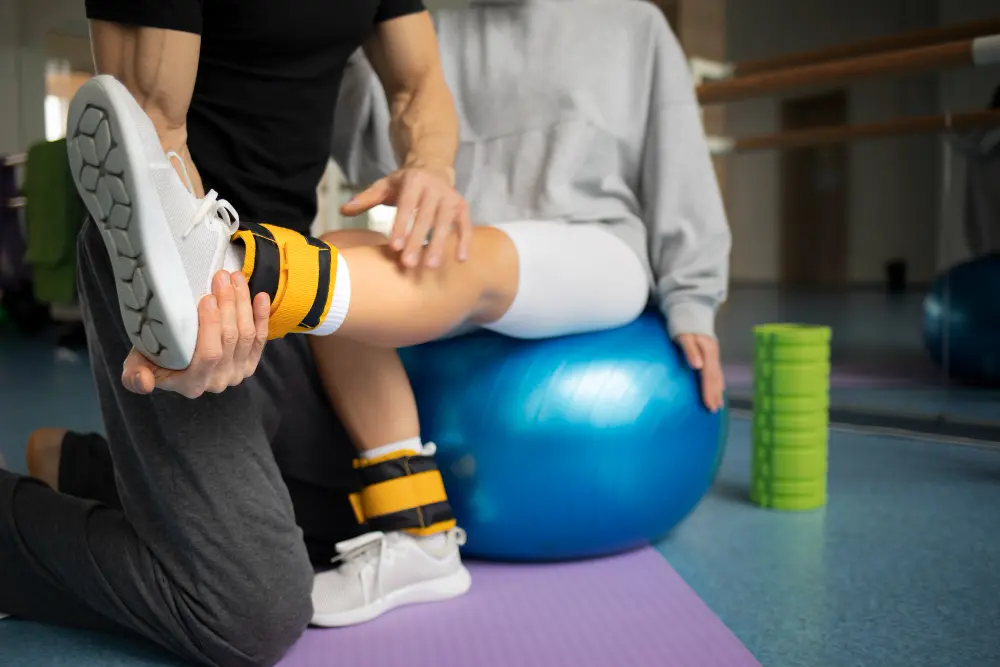
Functional rehabilitation builds the strength and stability needed to support recovery and prevent re-injury. This is where lasting results come from. Adjustments provide relief, but rehabilitation builds resilience.
For stubborn conditions, we also offer advanced therapies like shockwave therapy for chronic tendon problems and E-stim therapy for pain management and muscle re-education.
Why Biomechanics Matter
Here’s something many athletes don’t realize: the site of pain often isn’t the source of the problem.
A pitcher with elbow pain might have restricted thoracic spine mobility forcing the arm to compensate. A runner with knee pain might have weak hip stabilizers allowing the leg to rotate inward with each stride. A golfer with low back pain might have tight hip flexors limiting rotation and transferring stress to the spine.
This is why we evaluate the whole kinetic chain—how your body moves as an integrated system. Treating only the painful area provides temporary relief at best. Identifying and correcting the biomechanical faults that led to the injury creates lasting change.
ChiroMed’s Three Pillars of Health philosophy addresses this comprehensively:
Alignment ensures your spine and joints are positioned to move efficiently and distribute forces properly.
Core stability provides the muscular foundation that supports athletic movement and protects vulnerable structures.
Healthy lifestyle choices support tissue healing, energy production, and overall wellness.
When all three pillars are strong, your body handles the demands of sport much more effectively.
Acute vs. Chronic Sports Injuries
The approach to treatment depends partly on whether you’re dealing with something that just happened or something that’s been building for months.
Acute injuries require careful management in the early stages. The immediate priorities are controlling inflammation, protecting damaged tissues, and maintaining as much function as possible while healing occurs. Chiropractic care during this phase focuses on gentle mobilization, soft tissue work, and ensuring that compensation patterns don’t develop.
Chronic injuries present different challenges. By the time something becomes chronic, the body has typically developed adaptations—altered movement patterns, tight muscles in some areas and weak muscles in others, and sometimes structural changes in tissues. Treatment needs to address not just the original injury but also everything that’s changed because of it.
Many athletes we see have been dealing with lingering issues for months or even years. They’ve tried rest, they’ve tried pushing through, they’ve tried various treatments with limited success. Often, the missing piece is a comprehensive approach that addresses the injury, the compensation patterns, and the underlying factors that allowed the problem to develop in the first place.
When to Seek Treatment
Athletes are notoriously good at ignoring pain. It’s part of the mindset—discomfort is normal, and pushing through is expected. But there’s an important difference between muscle soreness from a hard workout and pain that signals an actual problem.
Consider scheduling an evaluation if you notice:
- Pain that persists beyond 1-2 weeks despite rest
- Sharp or stabbing sensations during specific movements
- Swelling, bruising, or visible deformity
- Decreased performance despite consistent training
Early intervention typically leads to faster recovery. Small problems addressed promptly often resolve in days or weeks. Those same problems left to worsen can become months-long rehabilitation projects.
Return to Sport: Doing It Right
Getting out of pain is one thing. Returning to full athletic activity is another.
Too many athletes rush back before they’re truly ready, only to re-injure themselves and end up worse than before. At ChiroMed, we help you navigate the return-to-sport process intelligently.
This means progressing through appropriate stages: from pain-free daily activities, to sport-specific movements at reduced intensity, to full practice, to competition. The timeline varies based on the injury, the sport, and the individual. Trying to shortcut the process almost always backfires.
We also work with you on injury prevention strategies—identifying risk factors, addressing weaknesses, and building the movement quality that reduces future injury likelihood.
Frequently Asked Questions
Do I need imaging before seeing a chiropractor for a sports injury? Not usually. Most sports injuries can be evaluated and treated based on clinical examination. If imaging is warranted—for example, to rule out a fracture or assess a suspected disc problem—Dr. Jeff will recommend it.
How soon after an injury should I come in? Generally, the sooner the better. Early treatment helps manage inflammation, prevents compensation patterns from developing, and often shortens overall recovery time. For acute injuries, we can typically see you within a day or two.
Can chiropractic help with concussions? Chiropractors can help manage some post-concussion symptoms, particularly neck pain and headaches that often accompany head injuries. However, concussions require careful evaluation and monitoring. If you’ve sustained a head injury, getting appropriate medical clearance is the priority.
Will I need to stop training completely? Not necessarily. Depending on your injury, we may be able to modify your training to allow continued activity while the injured area heals. Complete rest is sometimes necessary, but active recovery—maintaining fitness while protecting the injury—is often the better approach.
Get Back in the Game
Sitting on the sidelines isn’t where athletes want to be. Whether you’re nursing a recent injury or dealing with a chronic problem that’s been limiting your performance, ChiroMed Crawfordsville can help.
Dr. Jeff has helped athletes across Montgomery County—from high school competitors to recreational enthusiasts—recover from injuries and return to the activities they love. Our goal isn’t just to treat your current problem but to help you build a body that’s more resistant to future injury.
Ready to start your recovery? Schedule a consultation or call (765) 362-1500. Let’s get you back in the game.